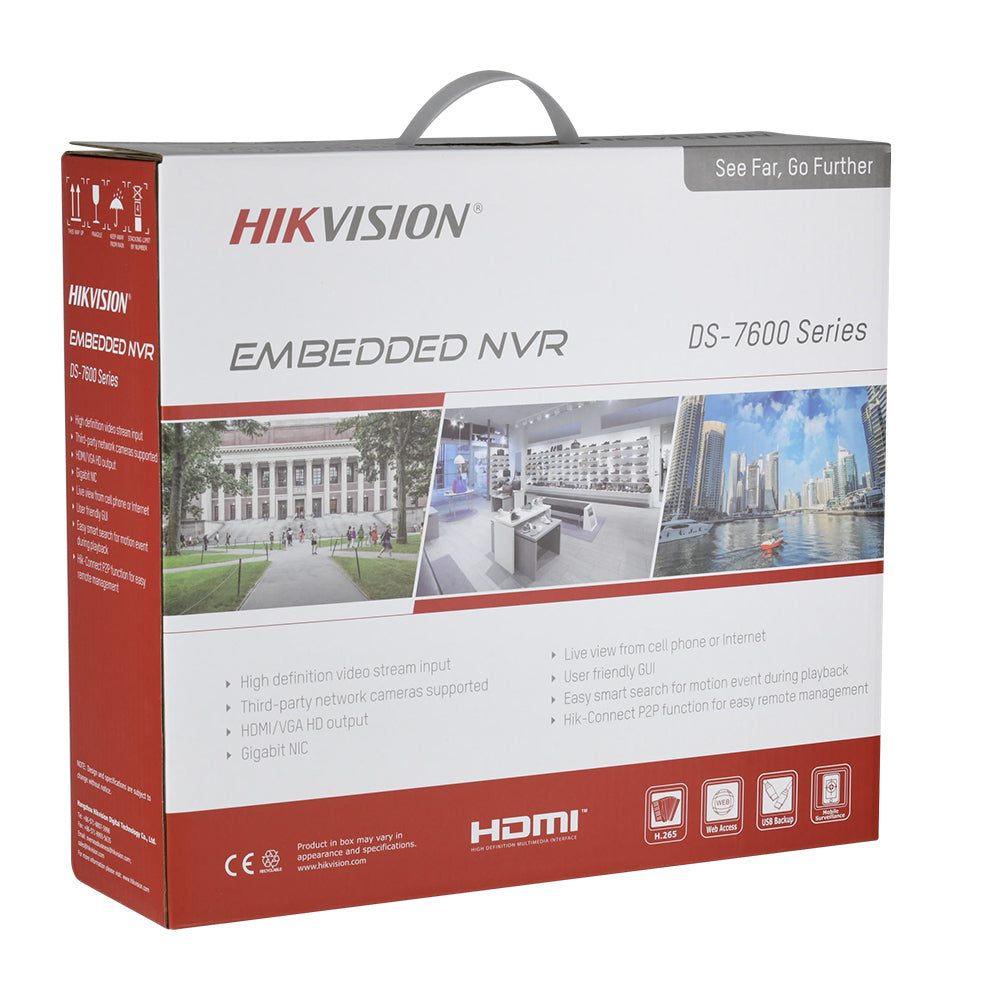
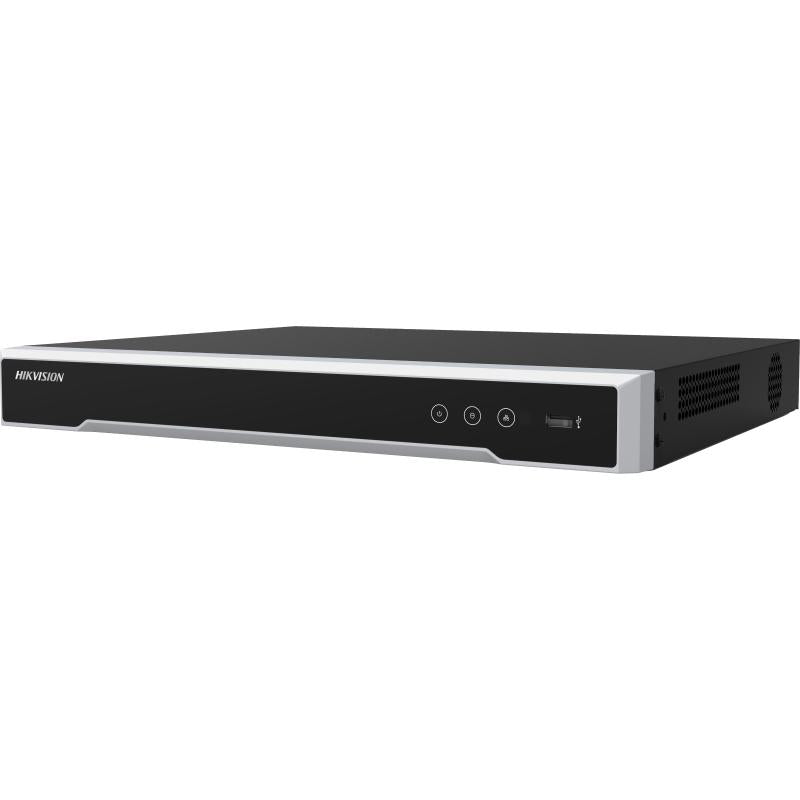
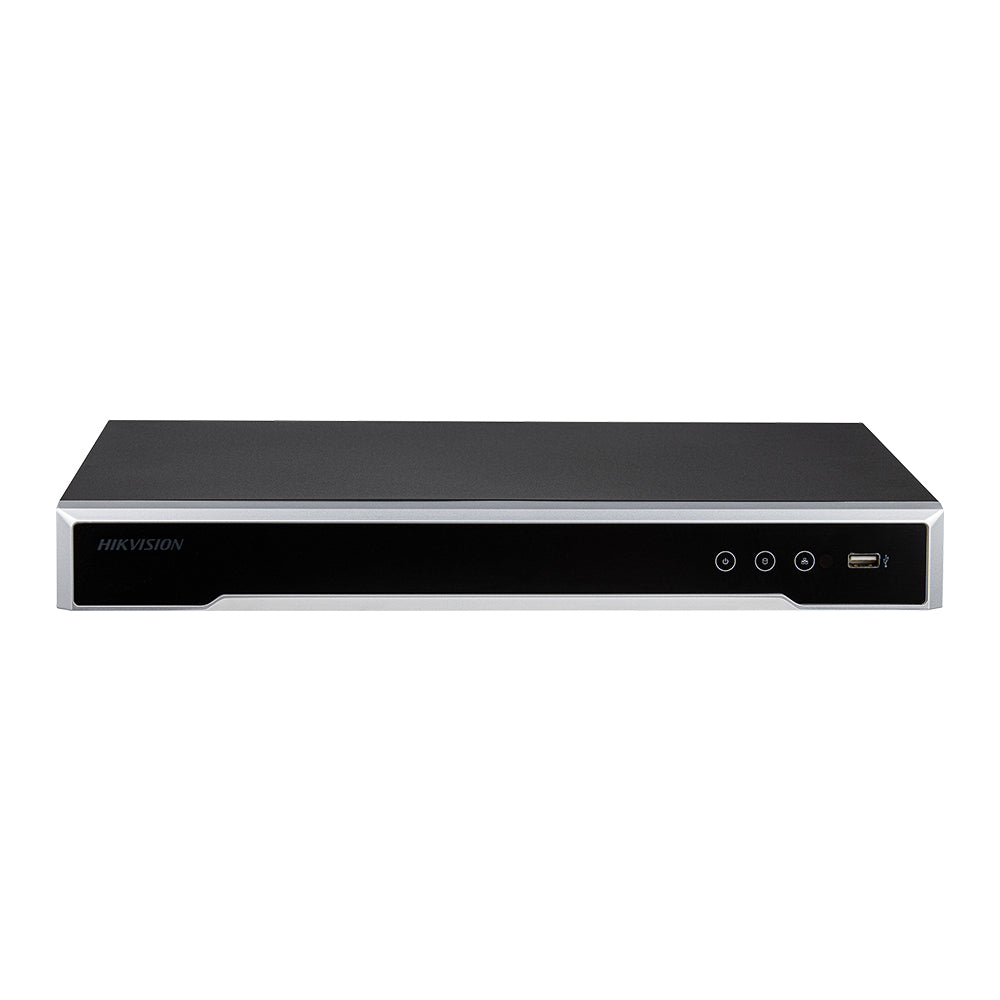
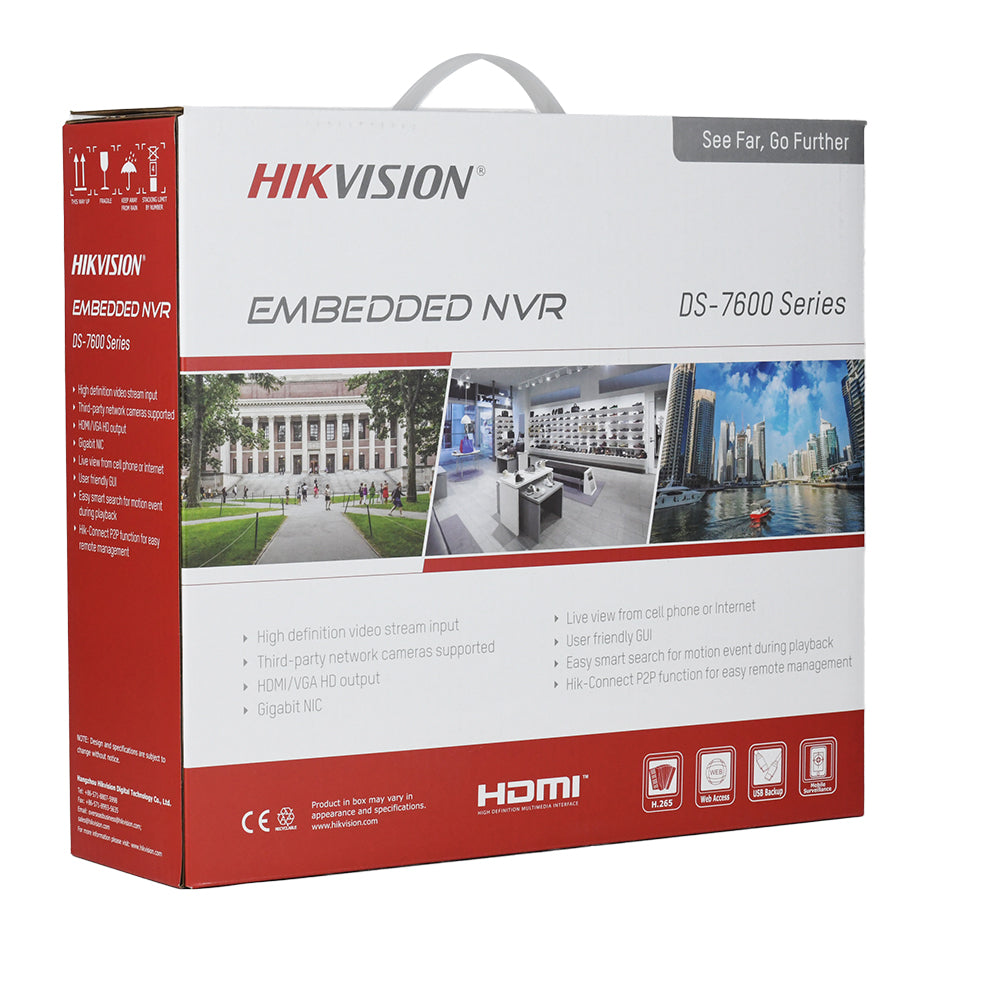
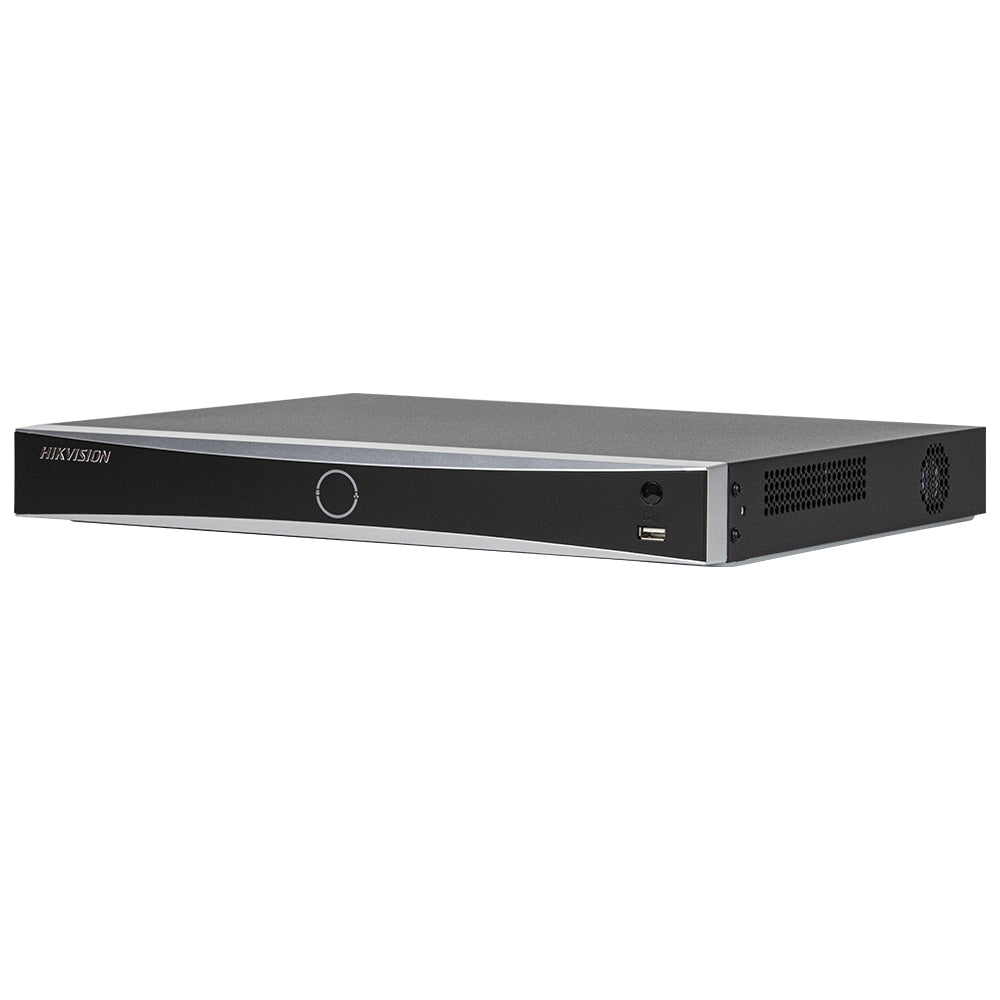
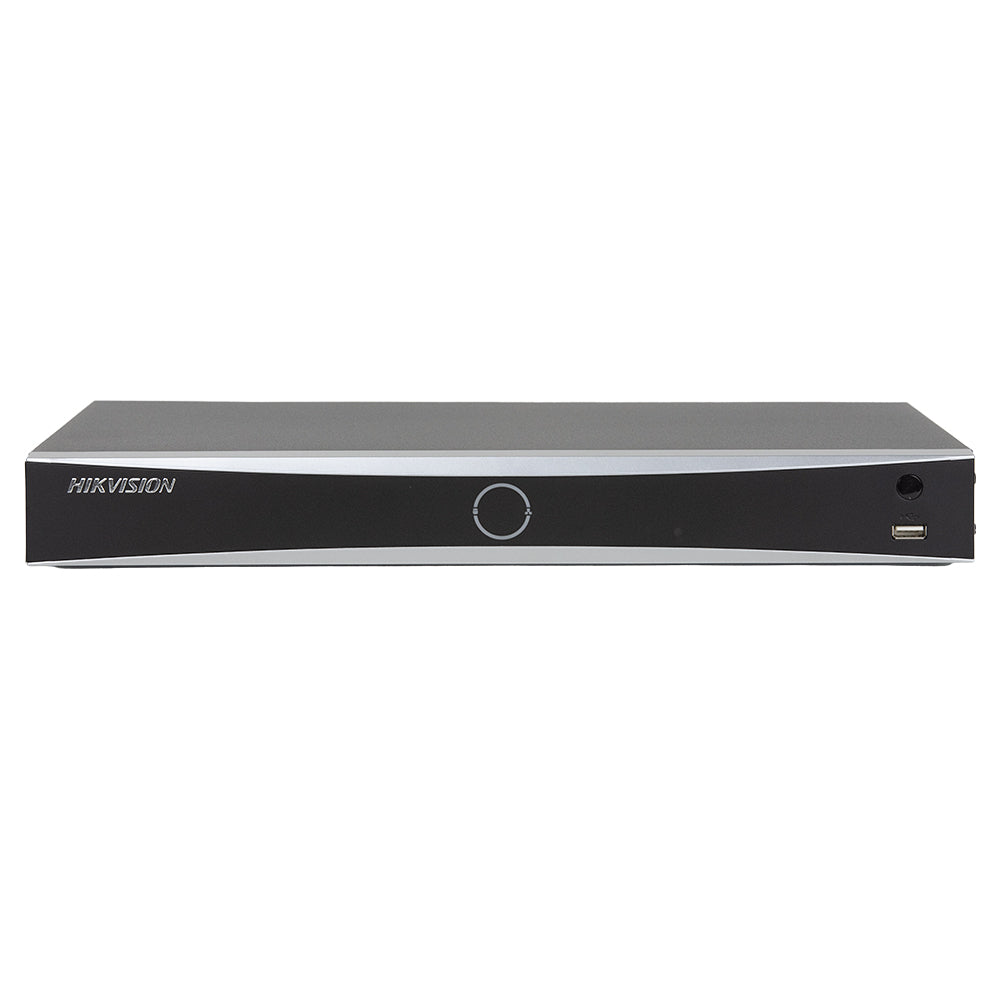
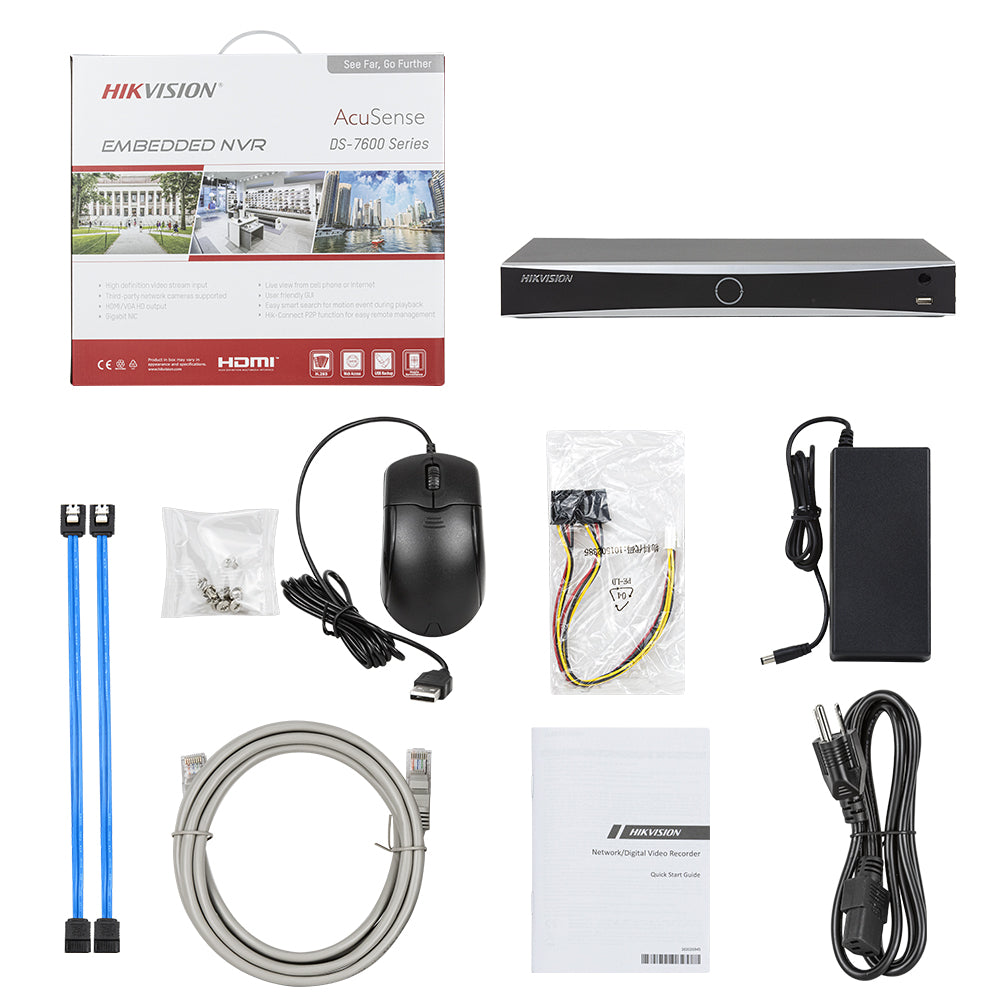
Sized for Sites That Need Eight Angles, Not Eighty
Most small commercial sites reach full coverage well before they run out of eight channels. A retail store typically needs the front door, the register area, the sales floor, the back exit, and the stockroom. A restaurant adds the kitchen pass and the delivery entrance. A gas station covers the pumps, the counter, and the forecourt.
An 8-channel recorder matches that reality. Buying a larger recorder for a site that will only ever run six or seven cameras means paying for channels, drive bays, and processing capacity that stay idle for the life of the system.
Estimating How Many Days You Will Keep
On a small system, retention is usually the specification that matters most, and it comes down to simple arithmetic. Daily storage consumption is driven by total bitrate:
- 8 cameras at 4 Mbps each = 32 Mbps total, roughly 346 GB per day
- 8 cameras at 2 Mbps each = 16 Mbps total, roughly 173 GB per day
Against a 4 TB drive, that works out to approximately 11–12 days in the first case and 23 days in the second. Halving the bitrate roughly doubles the retention.
Several settings move that number in your favour:
- H.265 or H.265+ encoding on supported cameras reduces bitrate substantially compared with H.264
- Motion-based or event-triggered recording stores far less data than continuous recording on low-traffic sites
- Lower frame rates on static scenes such as stockrooms cut consumption without losing evidentiary value
- Mixed resolutions — reserving 4K for the register and running 4MP elsewhere
Because many 8-channel models ship with one or two drive bays, check the maximum supported capacity per bay before assuming a retention target is achievable.
PoE or Non-PoE: Which Version to Order
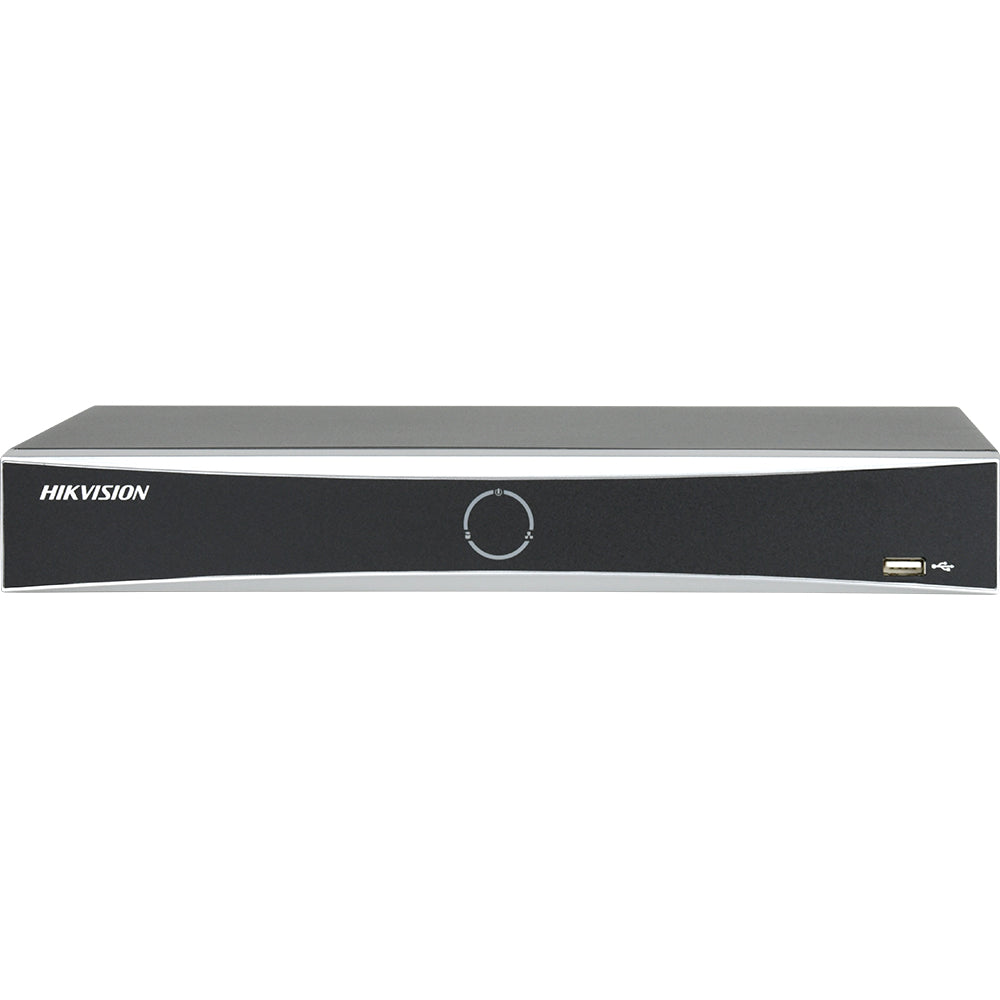
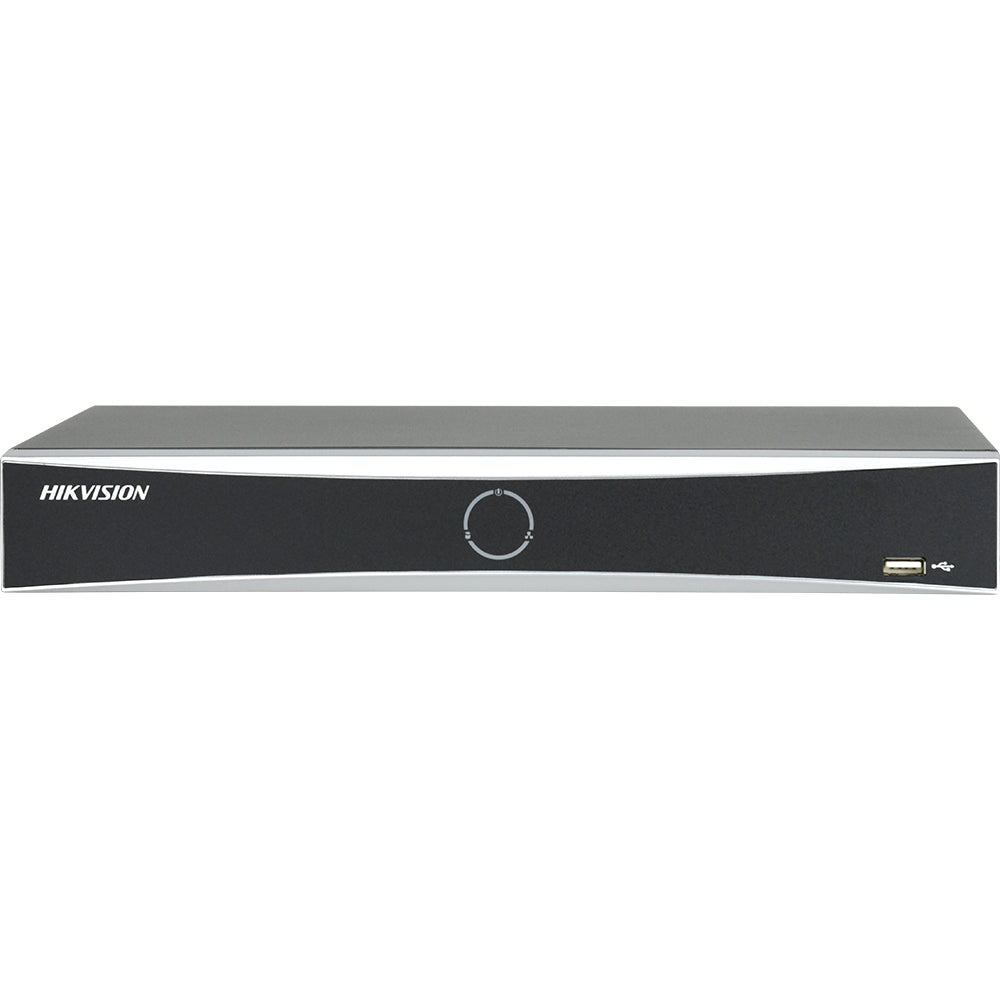
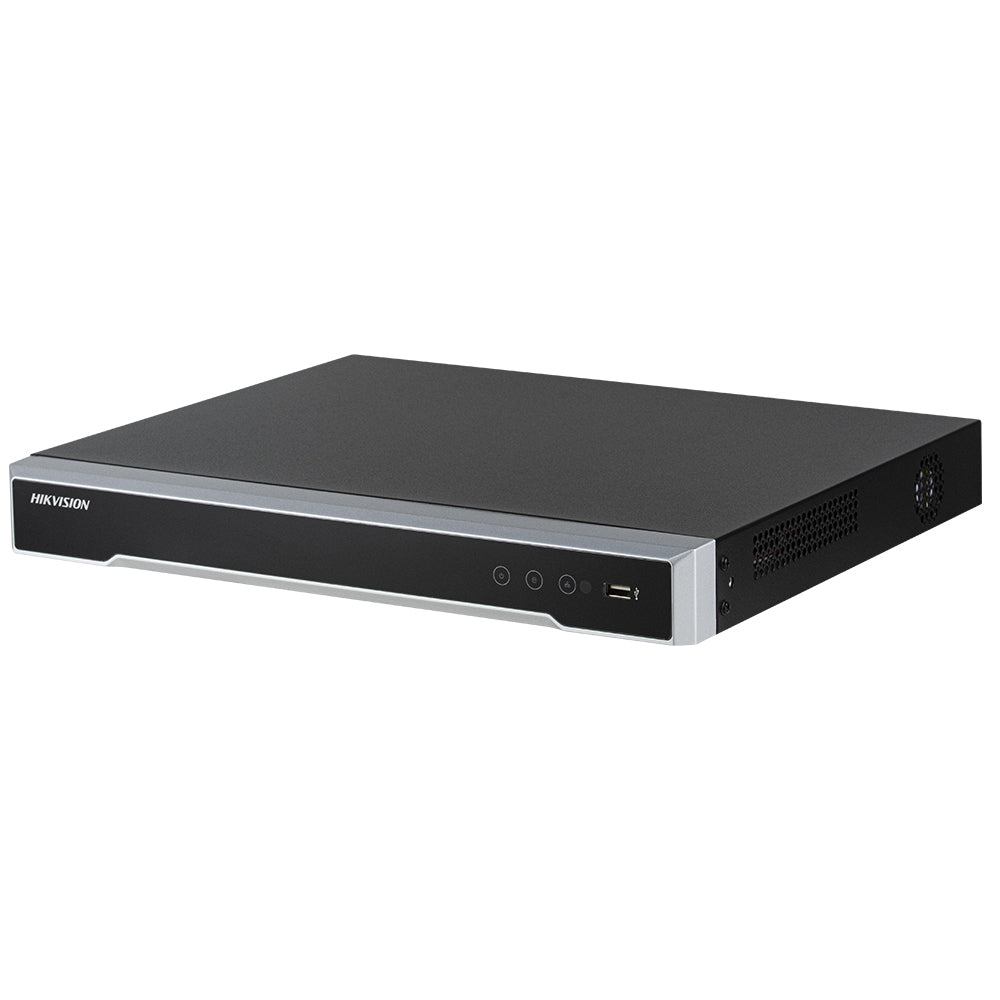
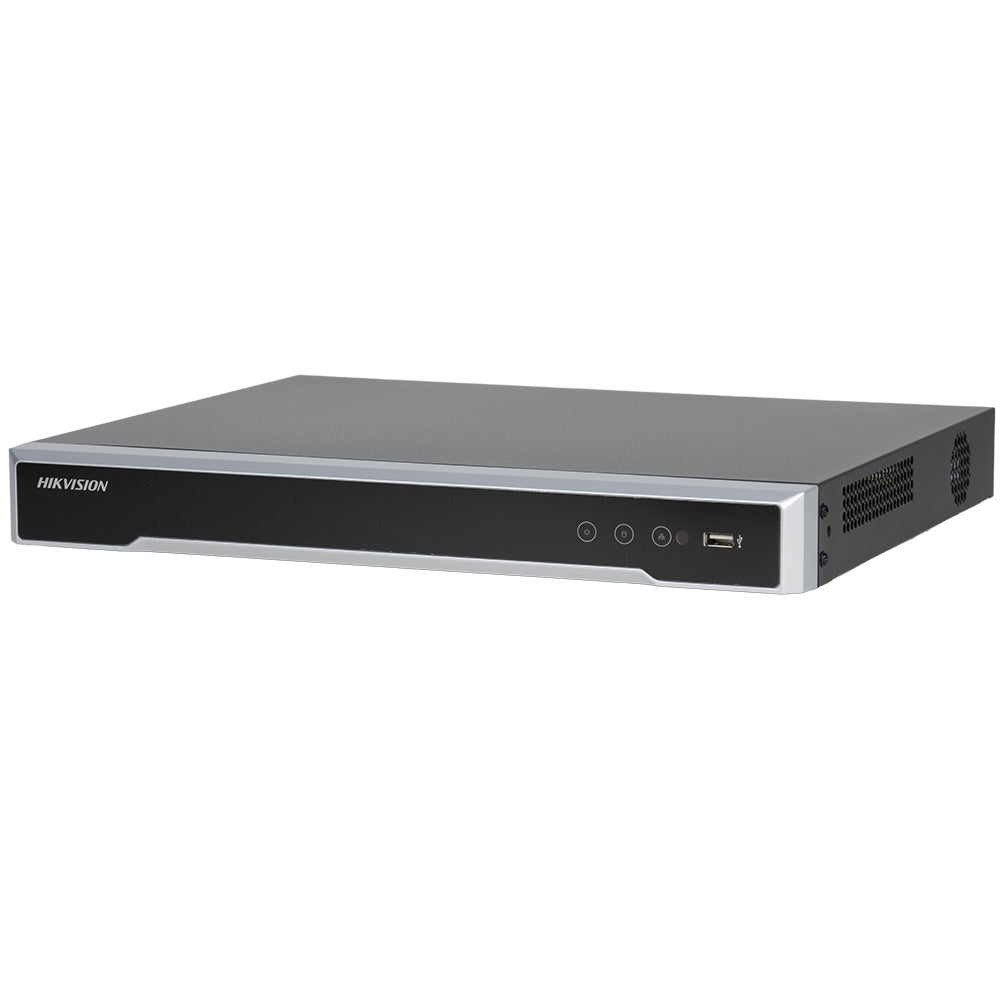
Hikvision's 8-channel range splits into two variants, and the right one depends on what already exists at the site.
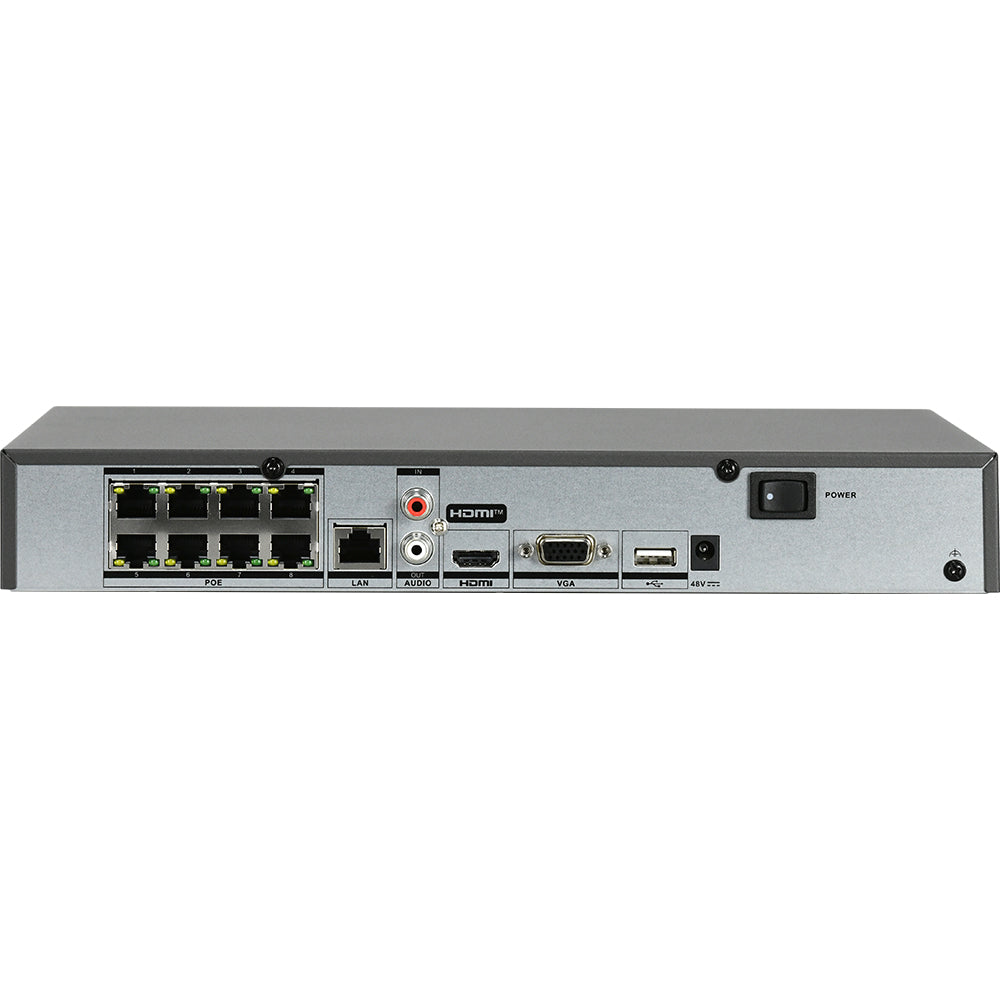
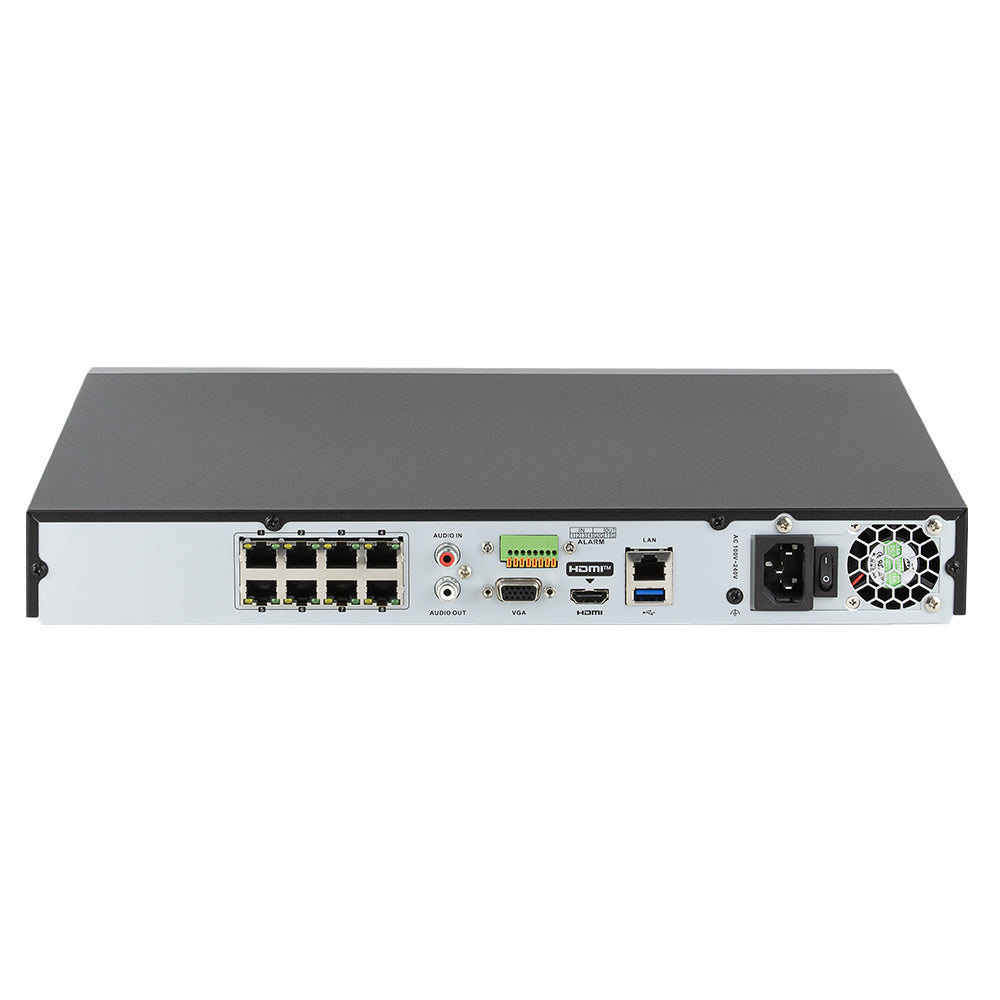
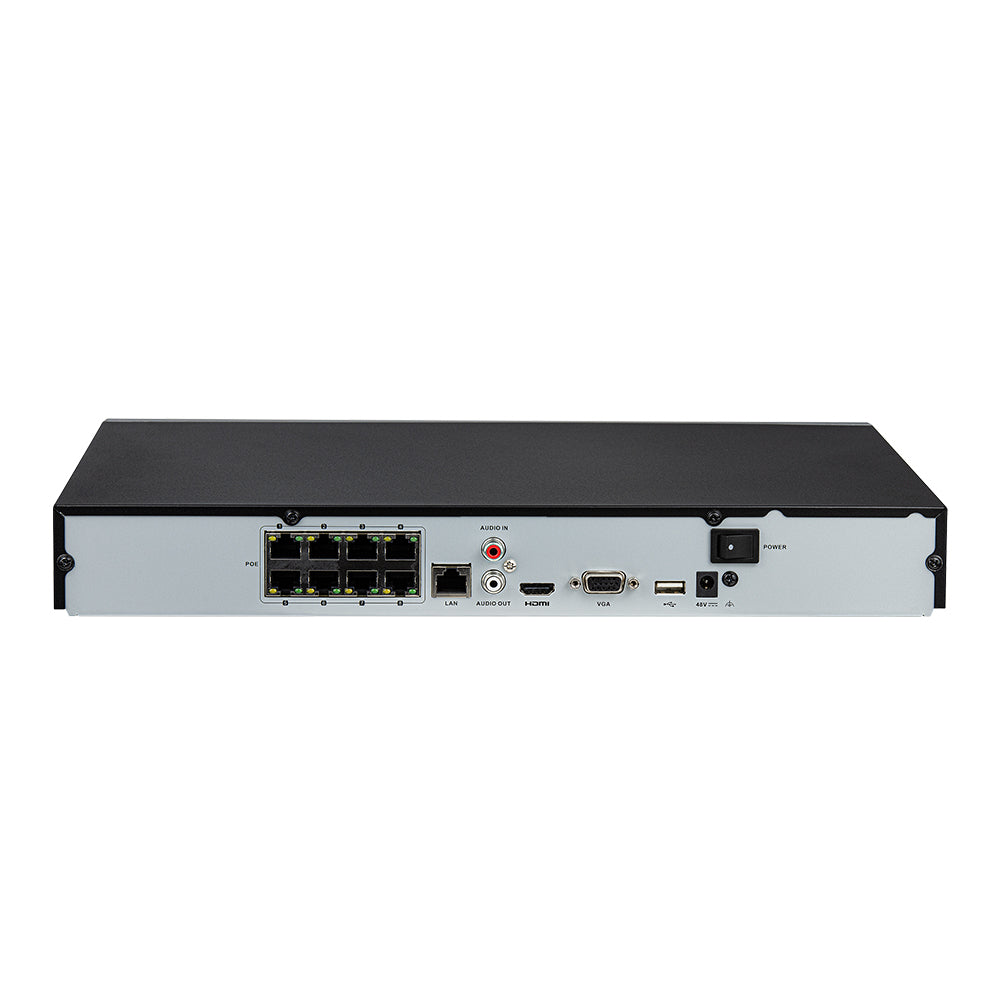
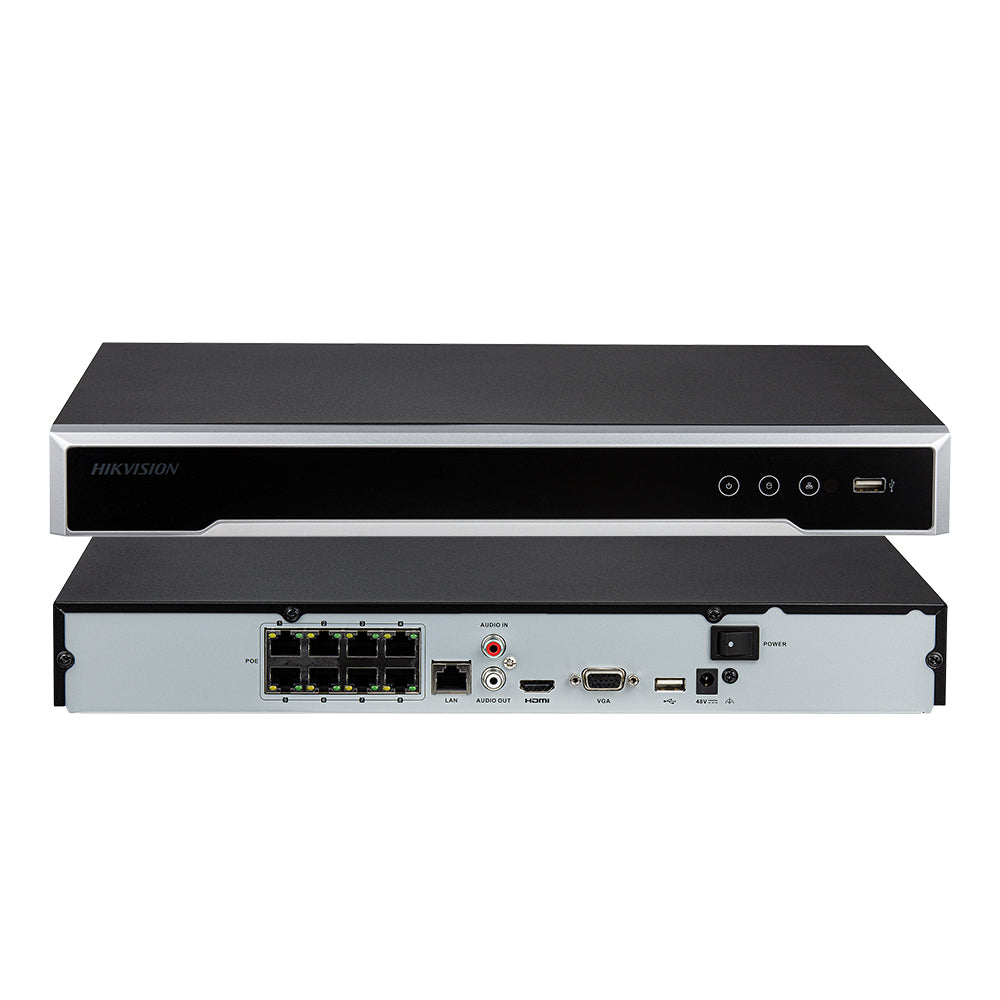
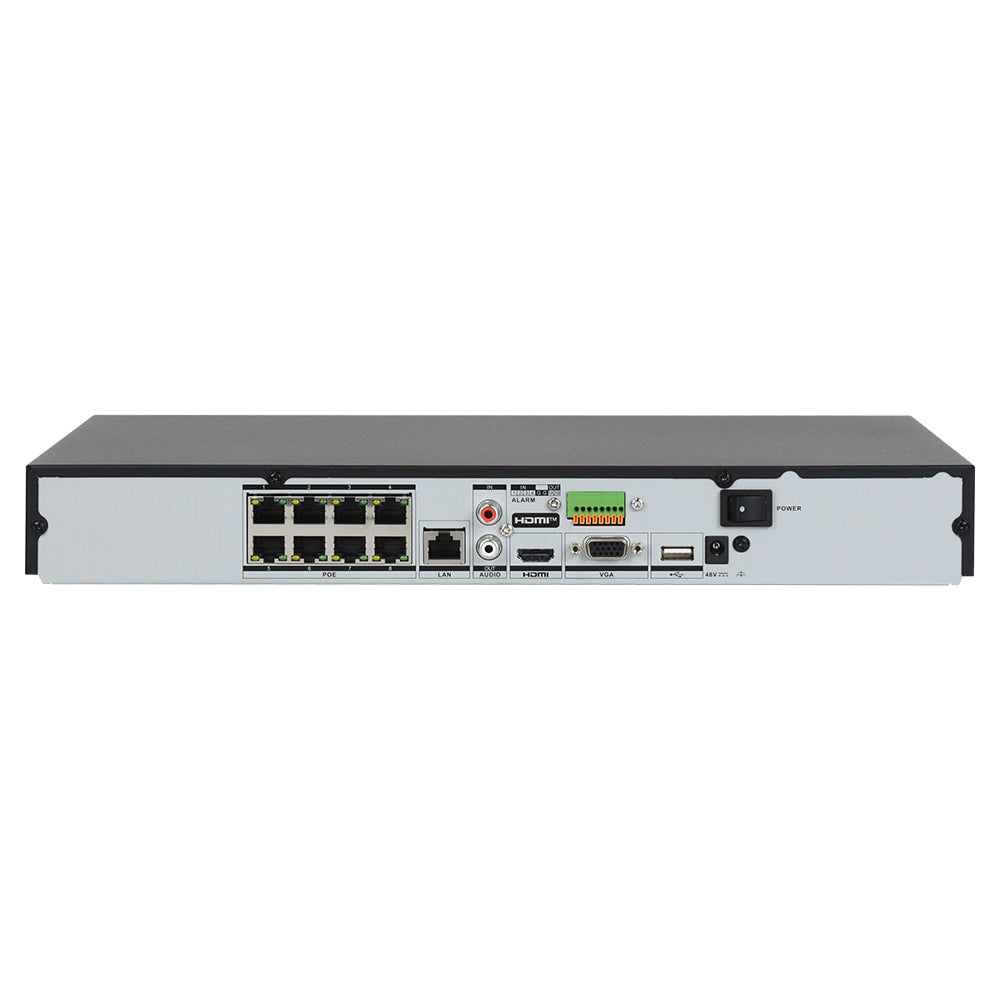
Choose a PoE model when you are installing cameras fresh. Each camera runs a single Ethernet cable straight to the back of the recorder, which supplies both power and data. There is no separate switch to mount, power, or configure, and cameras on the recorder's built-in ports typically sit on an isolated internal network.
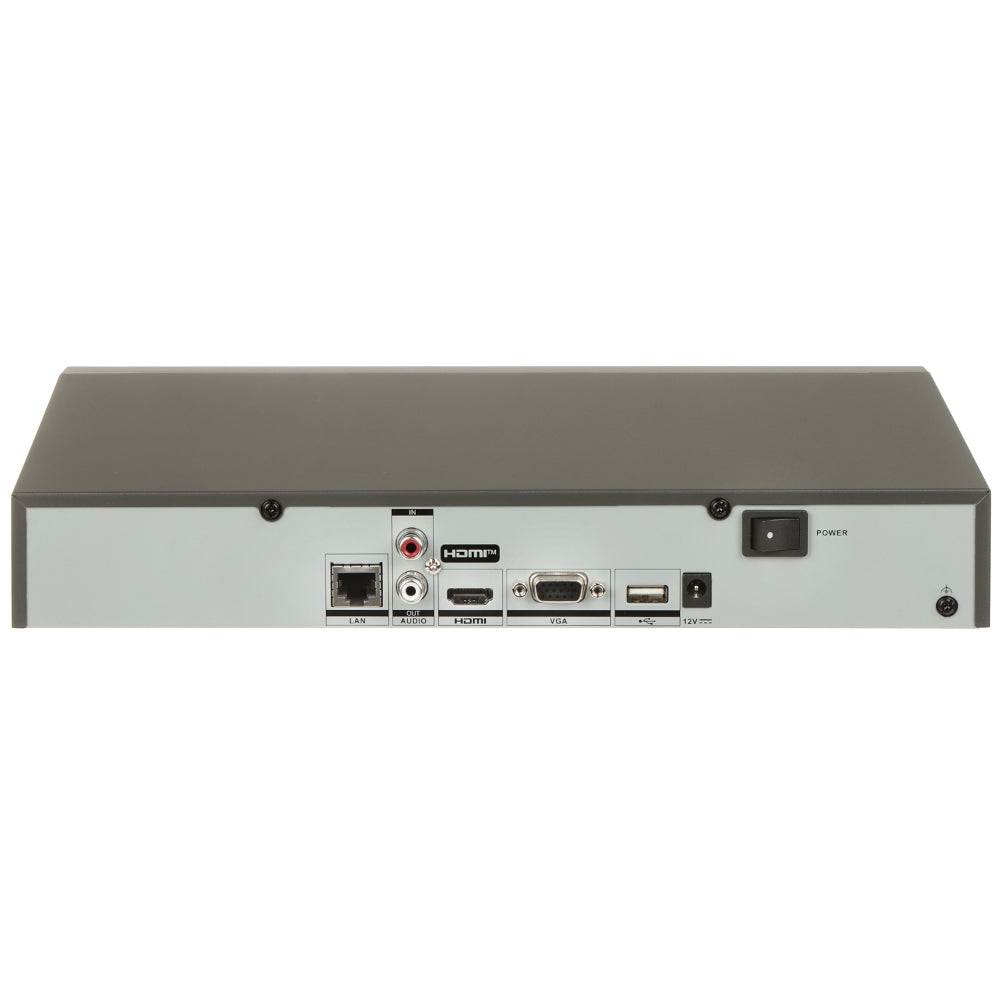
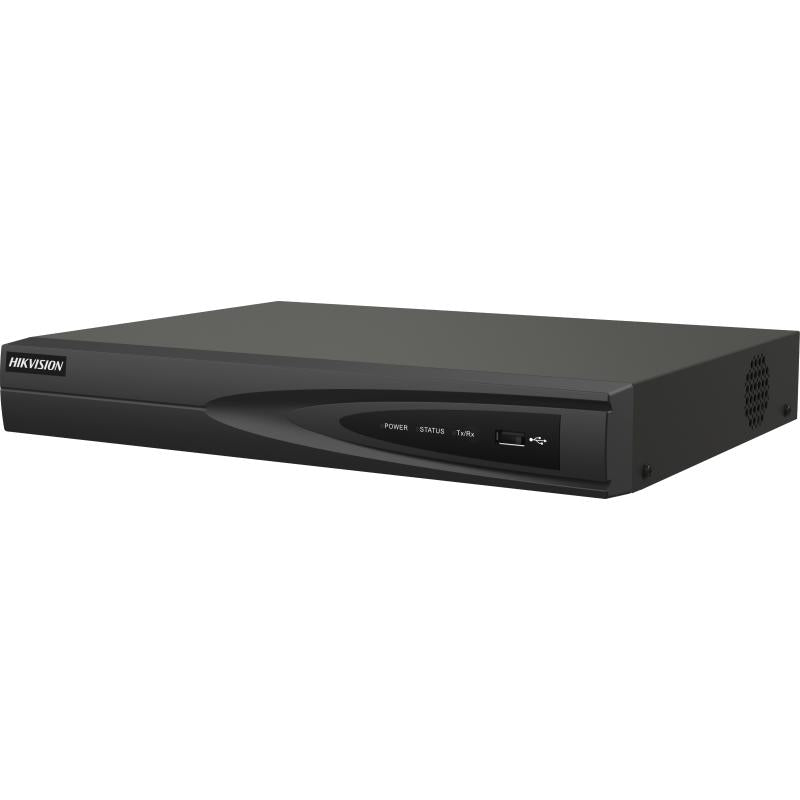
Choose a non-PoE model when cameras are already powered — through existing network switches, injectors, or local power supplies — or when camera locations are too far from the recorder for a direct run. These models connect to the site network through a single uplink and register cameras over the LAN.
If you are unsure, count how many cameras will physically terminate at the recorder location. Direct terminations favour PoE; distributed cameras across a building favour non-PoE with switches placed near each camera cluster.