How Hikvision ANPR Cameras Work
Hikvision ANPR cameras use image processing and character recognition to read license plates automatically.
The process has three main steps:
1. Locate the License Plate
The camera finds the license plate within the captured vehicle image. Hikvision's recognition system can process single-line and double-line plate layouts.
2. Separate and Read the Characters
The software identifies the individual letters and numbers, then converts them into license plate data.
3. Record and Use the Result
The plate number can be stored with the vehicle image, capture time and other information.
In a vehicle access system, the recognized plate can also be checked against a list of registered vehicles to trigger an entry decision.
More Than License Plate Recognition
Hikvision ANPR technology also provides information about the vehicles being monitored.
Vehicle Details
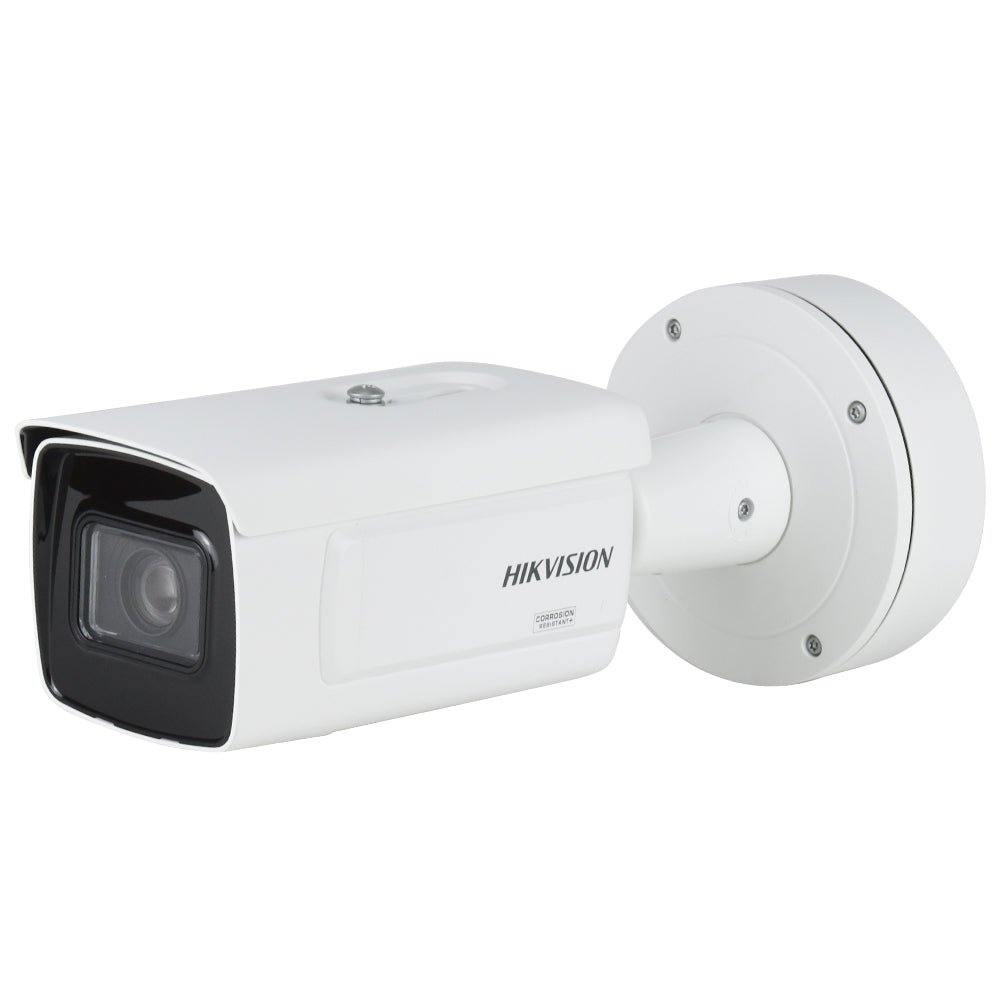
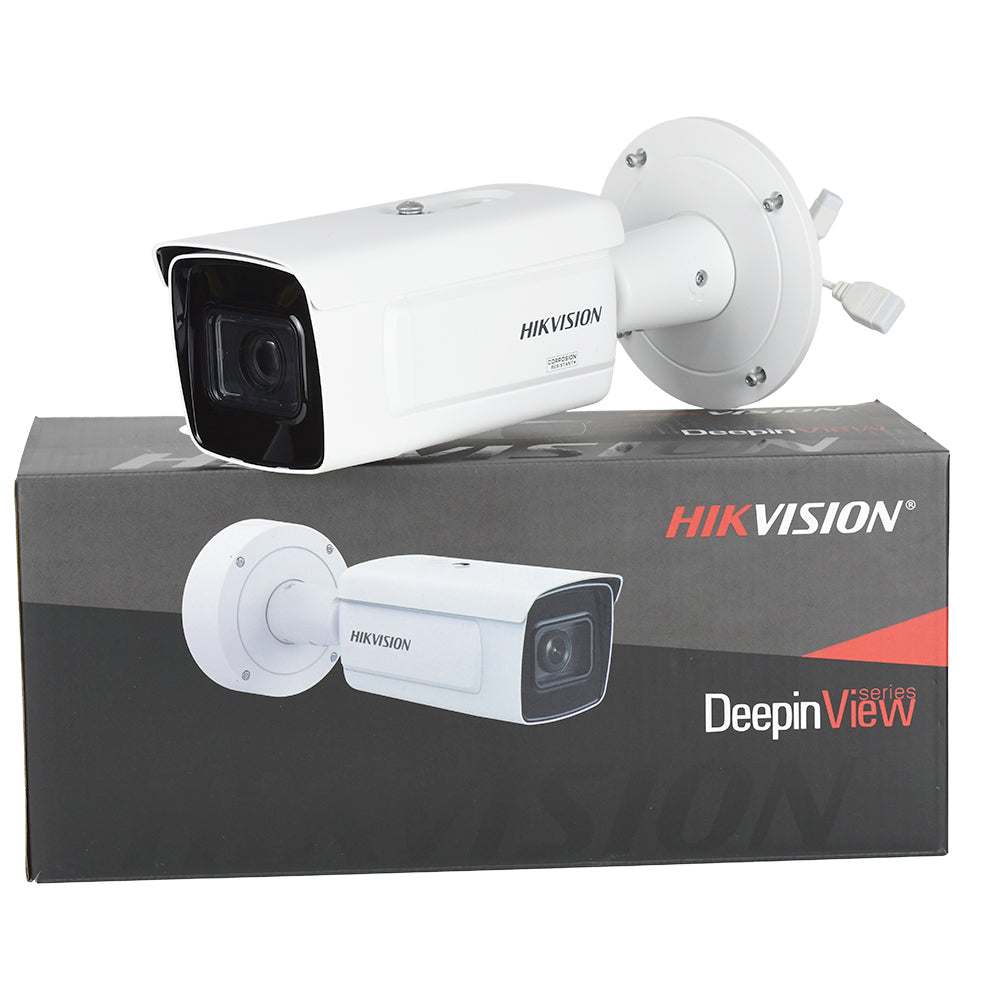
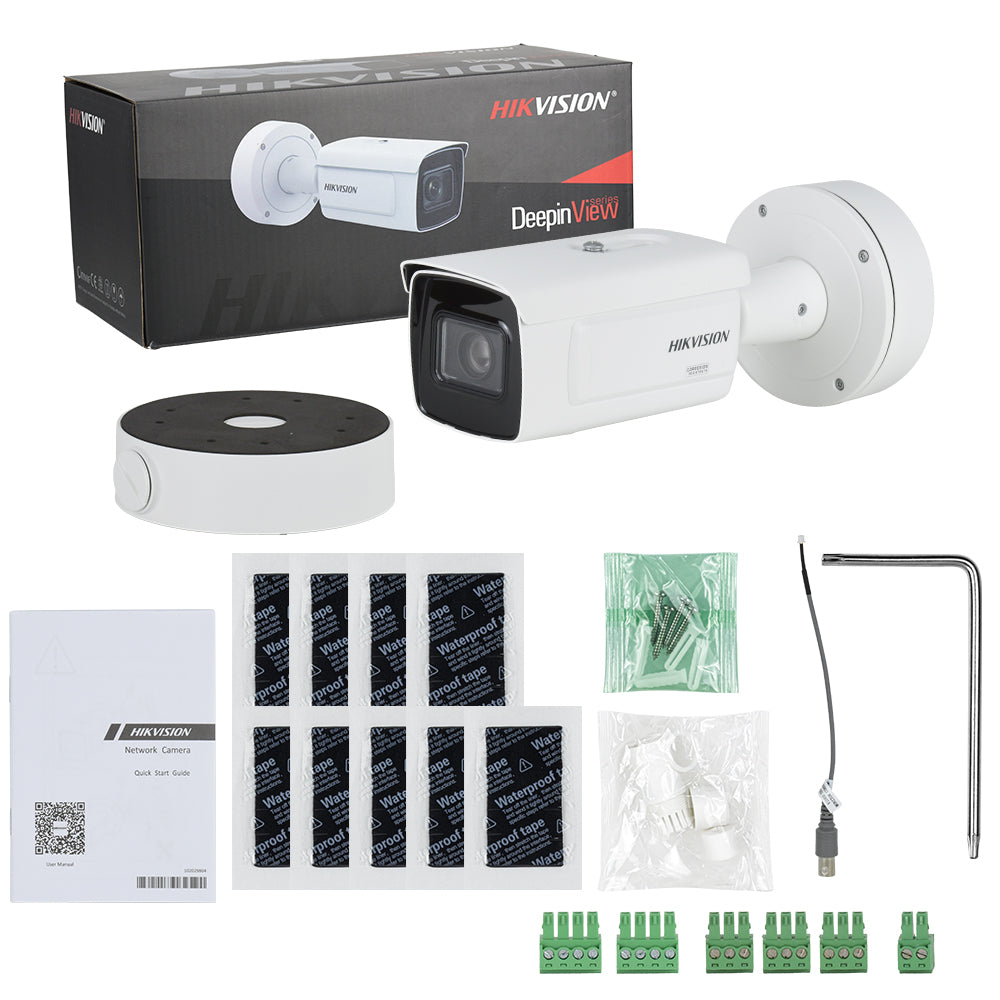
The DeepinView iDS-2CD7A46G0/P-IZHS(Y) recognizes vehicle types, colors, brands and driving directions.
These details help users search for vehicles using more than the license plate number alone.
Registered Vehicle Lists
Hikvision ANPR systems can check recognized plates against local allowlists and blocklists.
The iDS-2CD7A46G0/P-IZHS(Y) supports up to 10,000 list records, while the dedicated DS-TCG405-E access camera supports up to 100,000 entries across its allowlist and blocklist.
Parking and Vehicle Records
Hikvision ANPR systems support vehicle entry records, event searches and parking management.
For example, the iDS-2CD7A46G0/P-IZHS(Y) provides parking-space monitoring. Its distant-view mode monitors up to 40 parking spaces, while its close-view mode monitors up to four spaces and supports license plate recognition.
How to Choose a Hikvision ANPR Camera
The main consideration is what the camera needs to do with the recognized plate: record vehicle information, control an entrance or capture vehicles moving along a roadway.
DeepinView ANPR Cameras
Hikvision DeepinView ANPR cameras combine vehicle recognition with other intelligent video functions.
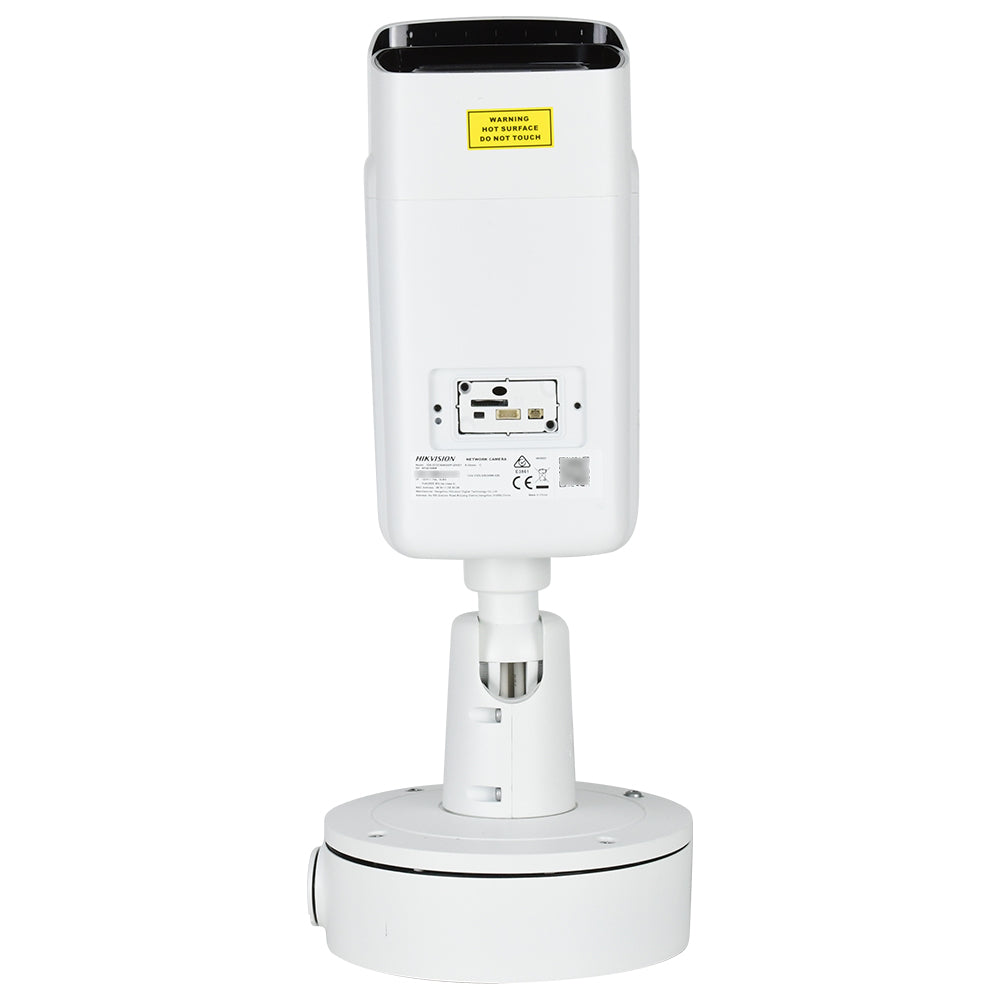
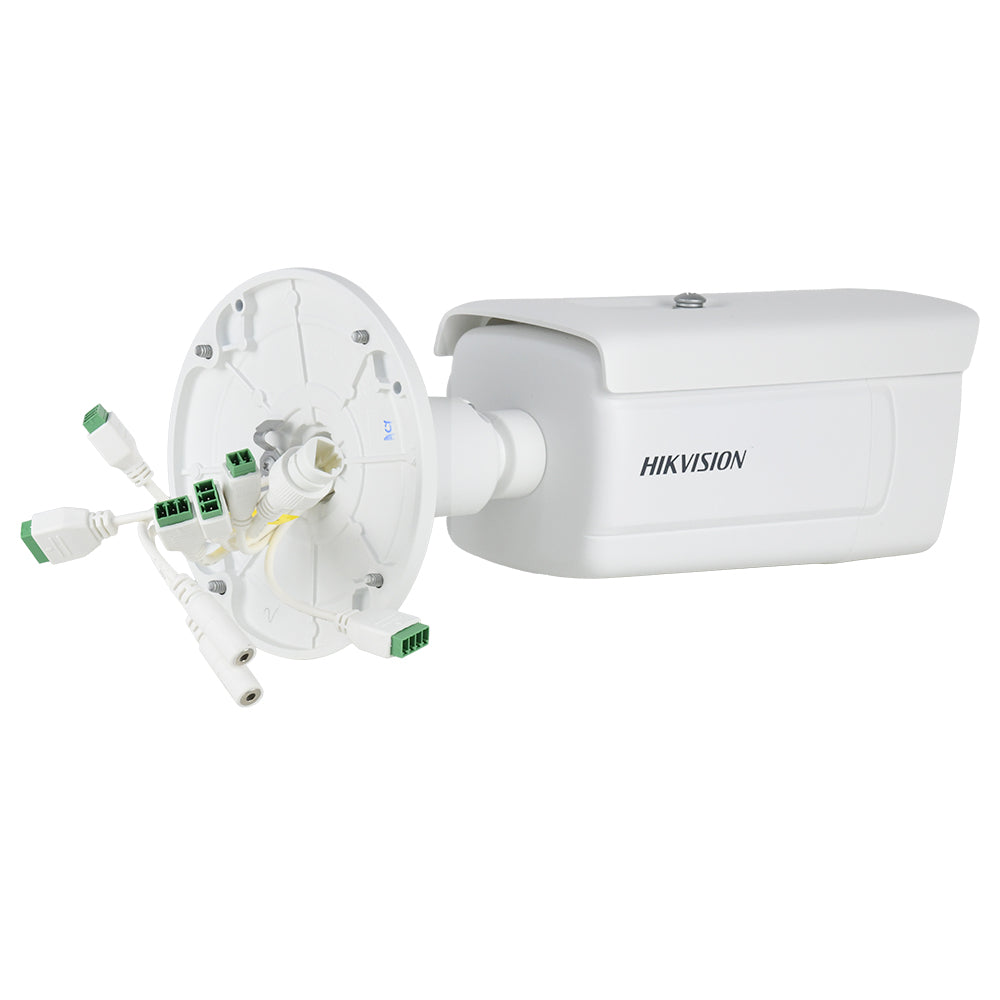
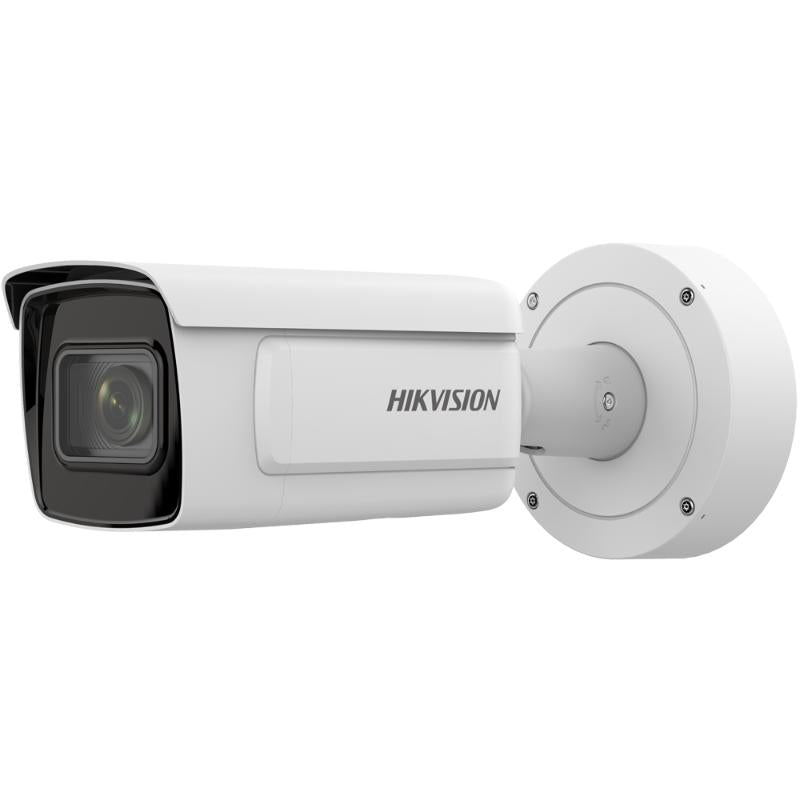
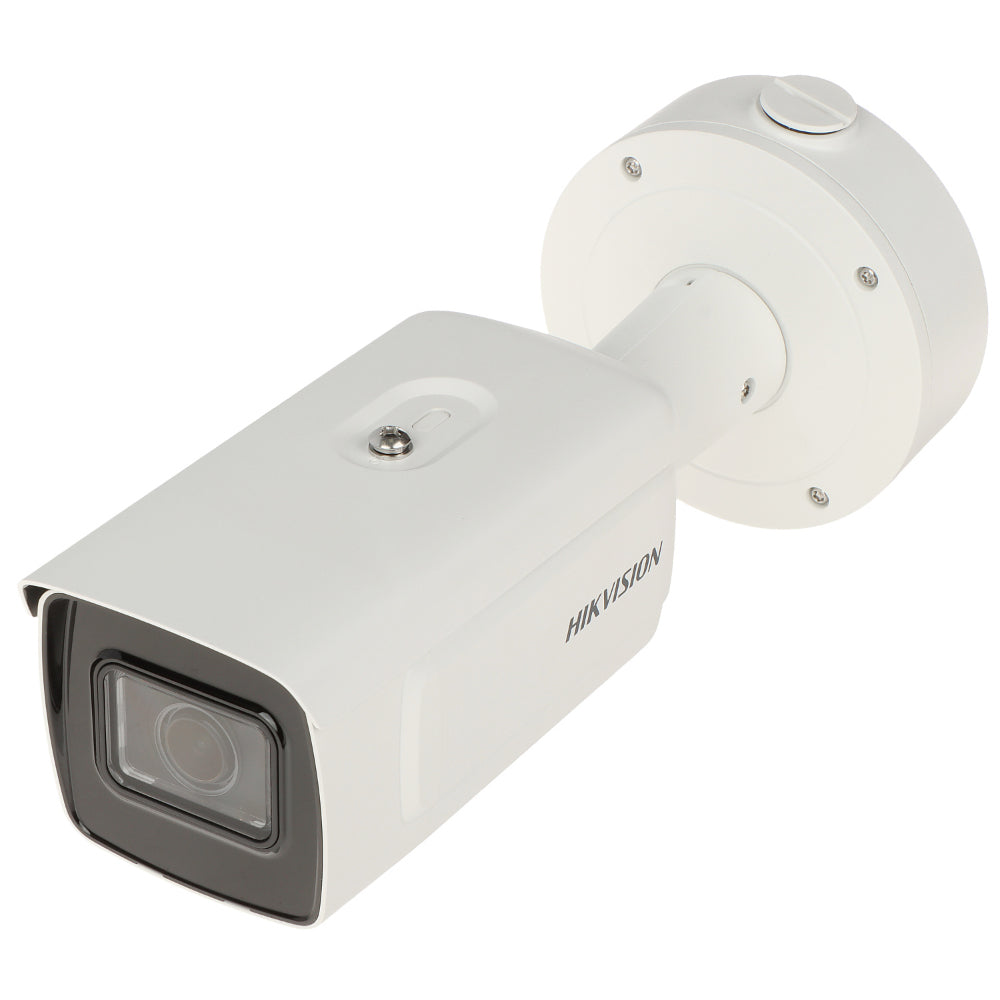
The iDS-2CD7A46G0/P-IZHS(Y) is a 4MP ANPR bullet camera with DarkFighter low-light imaging, a motorized varifocal lens and 140 dB WDR.
It supports vehicle attribute recognition, checkpoint monitoring, local vehicle lists and parking management functions.
The series offers 2.8–12 mm and 8–32 mm lens configurations for different viewing distances.
DeepinView ANPR is used when license plate data needs to be part of a broader video surveillance or vehicle monitoring system.
Dedicated ANPR Cameras for Vehicle Access
Dedicated entrance cameras combine license plate recognition with direct barrier-control functions.
The DS-TCG405-E uses built-in license plate recognition, local vehicle lists and relay outputs to control a connected barrier gate.
It supports camera-controlled access without a central management platform, including offline access decisions based on the configured vehicle list.
The DS-TMC403-EL is another dedicated entrance model. It supports a 1.5–12 m plate capture range, local allowlist and blocklist management, and four relay outputs.
These cameras serve controlled entrances such as parking garages, office buildings and industrial gates.
ANPR Cameras for Roads and Multiple Lanes
Hikvision also offers ANPR cameras designed for road traffic and higher vehicle speeds.
The iDS-TCM803-H(I) is an 8MP urban-road ANPR camera with a stated capture-speed range of 5–120 km/h and coverage of up to four lanes.
The iDS-TCV500-HI/H1 is a 5MP checkpoint camera supporting license plate recognition at vehicle speeds of 10–320 km/h and monitoring of up to two lanes.
For wider roadway coverage, the iDS-TDICC0-H dual-lens checkpoint system supports up to six lanes, with radar-based speed measurement from 10–320 km/h.
These systems are designed for applications such as road monitoring, checkpoints, toll stations and traffic analysis.
Planning a Hikvision ANPR Installation
Reliable license plate recognition requires the correct camera position, capture distance, viewing angle and lighting.
Capture Distance and Camera Height
The installation requirements are defined by the camera and lens configuration.
For example, Hikvision's DS-TCG405-E installation guide specifies:
- Camera mounting height: 1.3–1.7 m (4.3–5.6 ft)
- Recommended mounting height: 1.5 m (4.9 ft)
- Camera-to-plate distance: 3.5–5 m (11.5–16.4 ft)
- Recommended capture distance: 4 m (13.1 ft)
These measurements apply to the DS-TCG405-E installation configuration and are not universal limits for the entire ANPR range.
Vehicle Speed and Viewing Direction
Vehicle speed affects the shutter settings and capture requirements.
The iDS-2CD7A46G0/P-IZHS(Y) supports vehicle capture at up to 120 km/h with front installation and 80 km/h with side installation under its specified conditions.
For access lanes, the capture point should also allow the complete license plate to remain visible without obstruction from the barrier arm or surrounding structures.
Nighttime Lighting
Headlights, reflective plates and poor lighting can affect the captured image.
ANPR cameras use exposure control and dedicated illumination to keep license plate characters readable.
The illuminator, shutter settings and capture area should be configured for the actual installation conditions.
ANPR Recording and System Integration
Hikvision ANPR cameras with built-in recognition process license plates directly on the camera.
A separate NVR is not needed to perform the camera's own recognition function.
Standalone Access Control
Dedicated models such as the DS-TCG405-E control connected barriers through their built-in relay outputs.
The camera can use local vehicle lists to make access decisions without a central management server.
Centralized Vehicle Management
HikCentral Professional provides centralized management for systems with multiple cameras, vehicle entrances and parking facilities.
It supports vehicle records, searches, reporting and broader access-management functions.
Third-Party Integration
The DeepinView iDS-2CD7A46G0/P-IZHS(Y) supports ONVIF Profile M, along with other network interfaces.
Profile M provides a standardized way to exchange analytics metadata, including supported license plate information.
A third-party VMS must support the relevant metadata and event functions to use them. Basic video streaming alone does not provide the same ANPR search and management capabilities.